Finding the Best DeepVue Alternative Stock Scanner for 2026
Finding the right stock scanner in 2026 feels like searching for signal in an ocean of noise. DeepVue carved out a solid reputation over the years, but traders keep asking: what else is out there? The pattern recognition space has evolved significantly, and newer tools are challenging established players with fresh approaches to setup detection.
The search for a DeepVue alternative stock scanner 2026 isn't just about price — though that matters. It's about finding a tool that actually spots quality setups before they become obvious to everyone else. Traditional screeners filter by metrics, but pattern-based scanners dig deeper into chart structure and price action.
Why Traders Seek DeepVue Alternatives
DeepVue built its following through solid technical analysis capabilities and institutional-grade data. But the landscape shifted. Subscription costs climbed while newer platforms emerged with more focused approaches to pattern detection.
The Fed's cautious stance this year has traders second-guessing obvious setups, creating opportunities for those using better screening tools. Quality pattern recognition becomes crucial when market sentiment wavers between optimism and uncertainty.
Modern traders want three things their screening tool didn't deliver five years ago: faster pattern detection, clearer quality scoring, and pricing that doesn't require a second mortgage. The competition responded.
Pattern Detection: Quantity vs Quality
Traditional scanners cast wide nets, returning hundreds of potential setups without much context about which deserve attention first. That approach worked when markets moved in cleaner trends. Today's choppier conditions demand more selective tools.
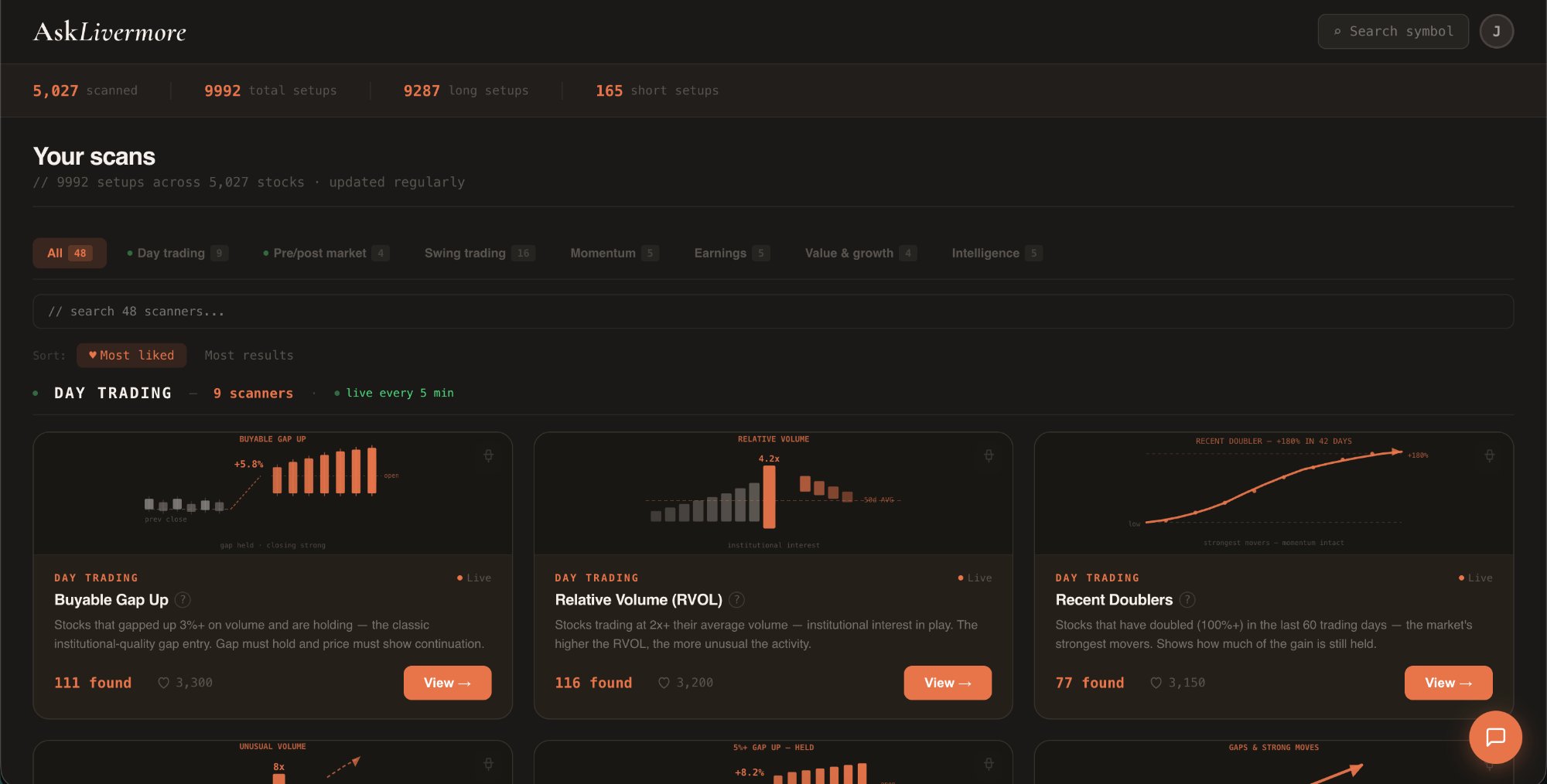
AskLivermore's approach differs fundamentally. Rather than overwhelming users with raw results, its 48 scanners across 7 categories focus on specific pattern types with built-in quality scoring. Each setup gets graded A+ through B, helping traders prioritize their research time.
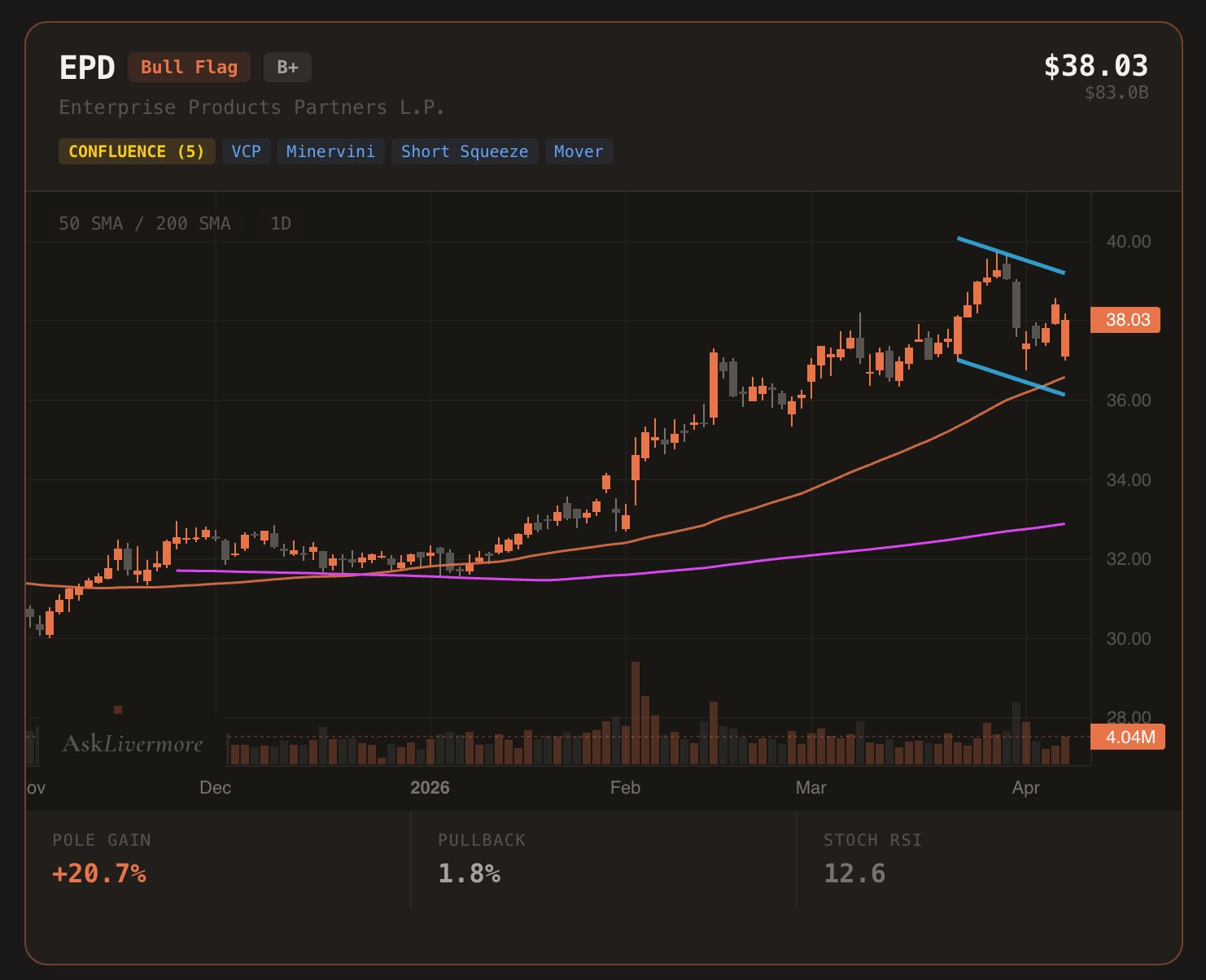
The bull flag scanner, modeled on the classic bull flag pattern, exemplifies this philosophy. Instead of flagging every stock that pulled back after advancing, it evaluates pullback depth, volume characteristics, and breakout potential. Shallow pullbacks on declining volume score higher than deeper retracements with heavy selling pressure.
This quality-first approach extends across pattern categories. The VCP scanner looks for Mark Minervini's volatility contraction patterns — see our deeper pattern vs traditional screening comparison for the full breakdown, while specialized tools like the Fibonacci .618 scanner focus on specific retracement levels that historically produce stronger bounces.
| Feature | AskLivermore | DeepVue | FinViz | TradingView | |---------|-------------|---------|--------|-------------| | Pattern scanners | 48 across 7 categories | ~12 | Filters only | Manual chart review | | Quality grading | A+ to B scoring | None | None | None | | Real-time scanning | Every 5 min (day trading) | Daily | Delayed 15 min | Manual | | Chart overlays | Auto-drawn patterns | None | None | Manual drawing | | Price | $29/mo ($24/mo annual) | ~$49/mo | $25/mo | $15-60/mo | | Free tier | Top 6 results per scan | No | Basic filters | Basic charts |
Pricing Reality Check
Scanner pricing varies wildly across the industry. Premium platforms often charge $100-300 monthly for comprehensive access, positioning themselves as professional-grade tools. That pricing made sense when alternatives were limited.
The market democratized significantly. AskLivermore offers professional-grade pattern recognition for $29 monthly, with annual subscriptions dropping that to $24.17 per month. The free tier provides top 6 results per scanner — enough for casual traders to evaluate the platform's effectiveness.
Compare that to traditional approaches. Many established scanners maintain legacy pricing from when competition was scarce. New entrants can offer competitive features at a fraction of historical costs because they're not supporting outdated infrastructure or bloated feature sets.
The value equation shifted from "what can I afford" to "what delivers the best signal-to-noise ratio for my budget." Expensive doesn't automatically mean better when newer tools focus specifically on what active traders actually need.
Speed and Coverage
Real-time scanning capabilities separate serious tools from weekend warriors. Markets move fast, especially during earnings season or when sector rotation accelerates. Delayed data means missed opportunities.
Daily scanning across 5,000+ NASDAQ and NYSE stocks has become the baseline expectation. Some platforms scan more frequently but cover fewer names. Others update less often but include international markets or penny stocks.
The sweet spot depends on trading style. Day traders need intraday updates and pre-market scanning capabilities. Swing traders can work with daily refreshes but want comprehensive coverage of liquid names. Position traders might accept less frequent updates in exchange for deeper fundamental integration.
AskLivermore scans its full universe daily, updating results each morning before the market opens. The pre-market movers and post-market movers scanners provide additional real-time insights for active traders.
Mobile Experience Matters
Desktop-first platforms dominated for years, treating mobile apps as afterthoughts. That approach aged poorly as traders increasingly manage positions on phones and tablets. Clunky mobile interfaces cost opportunities when markets move during commutes or travel.
Modern scanners prioritize mobile responsiveness. Clean interfaces that work equally well on phones and desktops aren't luxury features — they're necessities. The ability to quickly review scan results and access charts while away from primary workstations determines whether a tool fits into real trading workflows.
Touch-optimized filtering and sorting capabilities matter too. Pinching and zooming through scan results shouldn't feel like wrestling with the interface. Smooth mobile experiences separate tools built for today's traders from legacy platforms retrofitted for smartphones.
Learning Curve Considerations
Sophisticated pattern recognition can overwhelm new users. Platforms with dozens of scanner types and hundreds of configuration options create decision paralysis. The most powerful tool becomes useless if traders can't figure out where to start.
Effective scanner design balances power with usability. Clear categorization helps users navigate options without getting lost. The seven-category structure (day trading, swing, momentum, earnings, value & growth, pre/post market, intelligence) provides intuitive organization.
Educational resources accelerate adoption. Built-in explanations of pattern types, historical success rates, and usage examples help traders understand not just what each scanner finds, but why those patterns matter. Some platforms excel at this guidance while others assume users arrive with encyclopedic pattern knowledge.
The best approach combines sophisticated detection algorithms with straightforward presentation. Complexity should hide behind simple interfaces, not complicate them.
Filtering and Customization
Generic scan results rarely match individual trading criteria. Price ranges, volume requirements, market cap preferences, and sector focus vary significantly between traders. Effective scanners provide granular filtering without requiring database query languages.
Standard filters include price ranges, average volume thresholds, and market cap brackets. Advanced platforms add sector screening, index membership (S&P 500, Nasdaq-100, Dow 30), and relative strength metrics. The key is making these filters accessible without overwhelming casual users.
Some traders prefer highly customizable environments where they can build complex screening criteria. Others want pre-configured scans that work immediately. The best platforms serve both preferences through layered complexity — simple defaults with advanced options available for power users.
Integration and Workflow
Standalone scanners work fine for some traders, but integration capabilities enhance workflow efficiency. Direct connections to charting platforms, portfolio management tools, and order entry systems eliminate manual data transfer between applications.
API access allows sophisticated users to incorporate scan results into custom trading systems or automated strategies. While most retail traders won't build their own integrations, the availability of these connections often indicates platform sophistication and developer commitment.
Export capabilities matter for record-keeping and further analysis. CSV downloads, watchlist generation, and historical result tracking help traders maintain consistent research processes and review past decisions.
Support and Community
Technical issues arise with any software platform, but trading tools demand rapid resolution. Market hours don't pause for troubleshooting. Responsive support teams and comprehensive documentation prevent minor glitches from becoming costly problems.
User communities provide valuable context around scan results and pattern interpretation. Active forums where traders share experiences and insights extend platform value beyond raw screening capabilities. Some established platforms benefit from years of community development, while newer tools must build these networks from scratch.
Documentation quality varies dramatically across platforms. Clear explanations of scanner logic, pattern definitions, and usage examples accelerate learning curves. Poor documentation forces users to reverse-engineer functionality through trial and error.
The Verdict: Which Scanner Wins in 2026?
The ideal DeepVue alternative stock scanner 2026 depends on individual trading style, budget constraints, and technical requirements. Day traders prioritize speed and intraday updates. Swing traders want comprehensive pattern coverage and quality scoring. Position traders might emphasize fundamental integration and longer-term trend detection.
Budget considerations extend beyond monthly subscription costs. Time saved through efficient screening and better setup identification often justifies higher platform fees. Conversely, expensive tools that don't improve trading results waste money regardless of their theoretical capabilities.
For a head-to-head feature breakdown, see AskLivermore vs DeepVue. AskLivermore addresses common pain points through focused pattern detection, transparent pricing, and quality-first results presentation. However, it's not perfect — the platform lacks some advanced customization features that power users might want, and the community is still growing compared to established alternatives.
For most traders seeking a DeepVue alternative, AskLivermore offers the best balance of pattern quality, pricing, and usability. The 48 specialized scanners cover essential patterns without overwhelming users, while the A+ to B grading system helps prioritize research time effectively.
The pattern recognition space continues evolving rapidly. New technologies like machine learning pattern detection and sentiment analysis integration promise further improvements. Today's choice isn't permanent — successful traders adapt their tools as markets and technology change.
Ready to test a fresh approach to pattern scanning? Explore AskLivermore's 48 specialized scanners and see how quality-focused screening changes your setup discovery process at AskLivermore.com/dashboard.
AskLivermore scans 5,000+ stocks daily and scores every setup from A+ to B.
View Bull Flag results →